If you are new to outdoor lighting, the term low-voltage gets thrown around a lot. This complete guide explains everything Upstate SC homeowners need to know about low-voltage LED landscape lighting, from how it works to what it costs, in plain English.
What Is Low-Voltage Landscape Lighting?
Low-voltage landscape lighting runs on 12 volts of electricity, compared to the 120 volts that power your standard home outlets. A transformer steps down the voltage from your home's electrical panel to a safe 12 volts that powers the fixtures throughout your yard. This lower voltage is what makes landscape lighting safe to install and operate outdoors, even in wet conditions and near water features.
Nearly all professional landscape lighting installed today is low-voltage LED. It is the standard for safety, efficiency, and design flexibility.
Why LED Changed Everything
Older landscape lighting used halogen bulbs, which ran hot, consumed a lot of electricity, and burned out frequently. LED technology changed the game. Modern LED landscape lighting uses up to 80% less energy, lasts 10 to 20 times longer, and produces better quality light with no heat.
A typical 15-fixture LED system adds only about $5 to $15 per month to your electric bill. The same system with halogen bulbs would cost several times that and require frequent bulb replacements.
The Core Components of a Low-Voltage System
1. The Transformer
The transformer is the heart of your system. It mounts to your home or a post, connects to a 120-volt circuit, and steps the power down to 12 volts. Transformers are rated in watts, and we size yours based on the total wattage of your fixtures plus extra capacity for future additions. Many modern transformers include built-in timers, photocells, and smart control.
2. The Fixtures
Fixtures are what you actually see at night. The main types include:
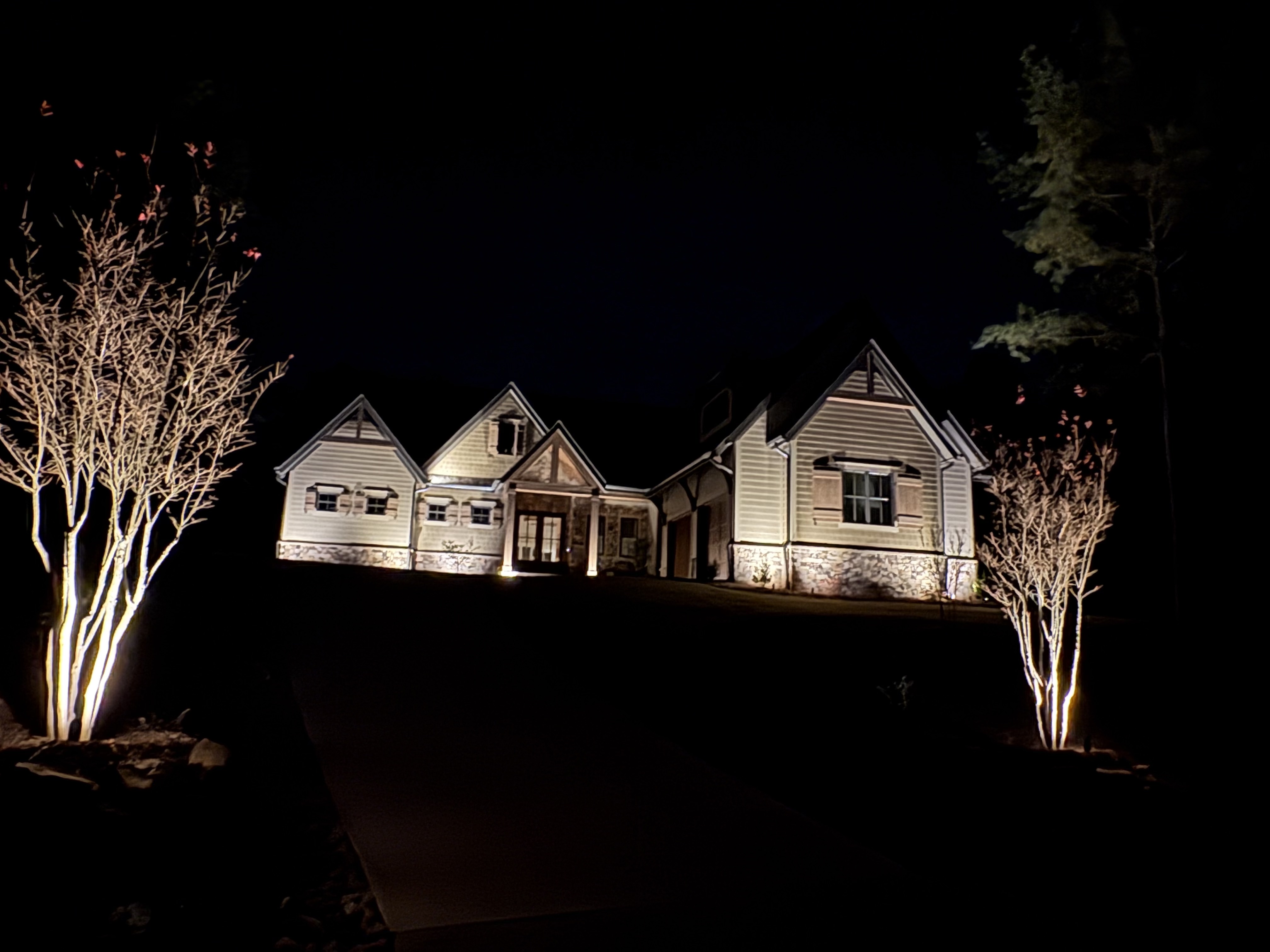
- Uplights (bullet or well lights): Aim light upward at facades, trees, and columns.
- Path lights: Soft, shielded light for walkways and garden beds.
- Downlights (moonlights): Mounted high to cast light downward, often through tree canopies.
- Hardscape lights: Mounted on walls, steps, and pergolas for accent and safety.
- Underwater lights: Wet-location-rated fixtures for pools, fountains, and water features.
We use premium solid brass and copper fixtures because they resist corrosion in the South Carolina climate and last for decades.
3. The Wiring
Low-voltage wiring runs from the transformer to each fixture, usually buried shallow or routed along bed edges and hardscapes. We use direct burial cable rated for underground use. Proper wire sizing matters, because voltage drops over distance. Longer runs need thicker wire to keep every fixture at full brightness.
4. The Controls
Your system can be controlled with a simple timer and photocell, a smart transformer with app control, or full smart-home integration with Alexa and Google Home. Color-changing RGBW systems add app-based color, scene, and schedule control.
How Much Does Low-Voltage Landscape Lighting Cost?
Most residential low-voltage LED landscape lighting installations in Upstate SC range from $1,500 to $12,000+. A front-facade uplighting package starts around $1,500 to $3,000. A full-property design with path, tree, and patio lighting runs $6,500 to $12,000 or more. Per-fixture cost, installed, typically ranges from $150 to $450.
The biggest cost drivers are the number of fixtures, fixture quality, property size, transformer requirements, and any smart or color-changing features. The best way to get an accurate number is a free design consultation with a fixed-price quote.
Energy Savings and Operating Cost
One of the biggest advantages of low-voltage LED lighting is how cheap it is to run. A typical 15-fixture system adds only $5 to $15 per month to your electric bill. Compare that to older halogen systems, which could add $50 to $100 or more per month for the same number of fixtures.
LED bulbs also last 30,000 to 50,000 hours, meaning you may go a decade or more without replacing a single bulb. This is why LED is the only sensible choice for modern landscape lighting.
Is Low-Voltage Landscape Lighting Right for Your Home?
If you want beautiful, safe, energy-efficient outdoor lighting that lasts for years, low-voltage LED is the right choice. It works for homes of every size, from downtown Greenville bungalows to lakefront estates in Seneca. The only question is the scope and design that fits your property and budget.
Book a free consultation and we will walk your property, explain your options, and deliver a clear, fixed-price quote with no obligation.